Gather reliable details
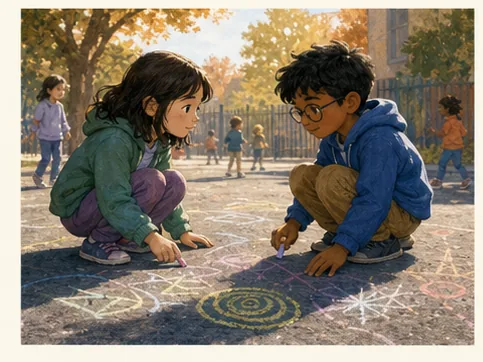
Pick a real social setting and one low-pressure way to participate. Shared materials, parallel play, or a specific question is easier to rehearse than the broad instruction to ‘go make a friend.’
A social story about making friends at school works better when it rehearses one specific, low-pressure way to join in than when it tells a child to go and make a friend. Choose the real setting, choose the shared material, and read the script below before the next playtime.
Start your child's free previewOne browser preview: your child’s full story outline, a cover, and one inside page — watermarked, no card needed.
Use the material your child's playground really has. Keep the sentence about being told no — it is the one that makes trying again possible.
A personalized book works best when its details match what your child will actually experience. These pointers help you shape the story — and keep using it after the day arrives.
Pick a real social setting and one low-pressure way to participate. Shared materials, parallel play, or a specific question is easier to rehearse than the broad instruction to ‘go make a friend.’
Practice both an invitation and a neutral response if another child says no. The story should leave room for watching quietly and trying again with someone else later.
Celebrate concrete attempts rather than promising instant friendship. Add names or activities only when they are real, and keep the child’s successful words available for another day.
The example book below rehearses exactly that: watch, draw nearby, offer one color, and build something together. Sprokle does not diagnose a child or replace professional advice.